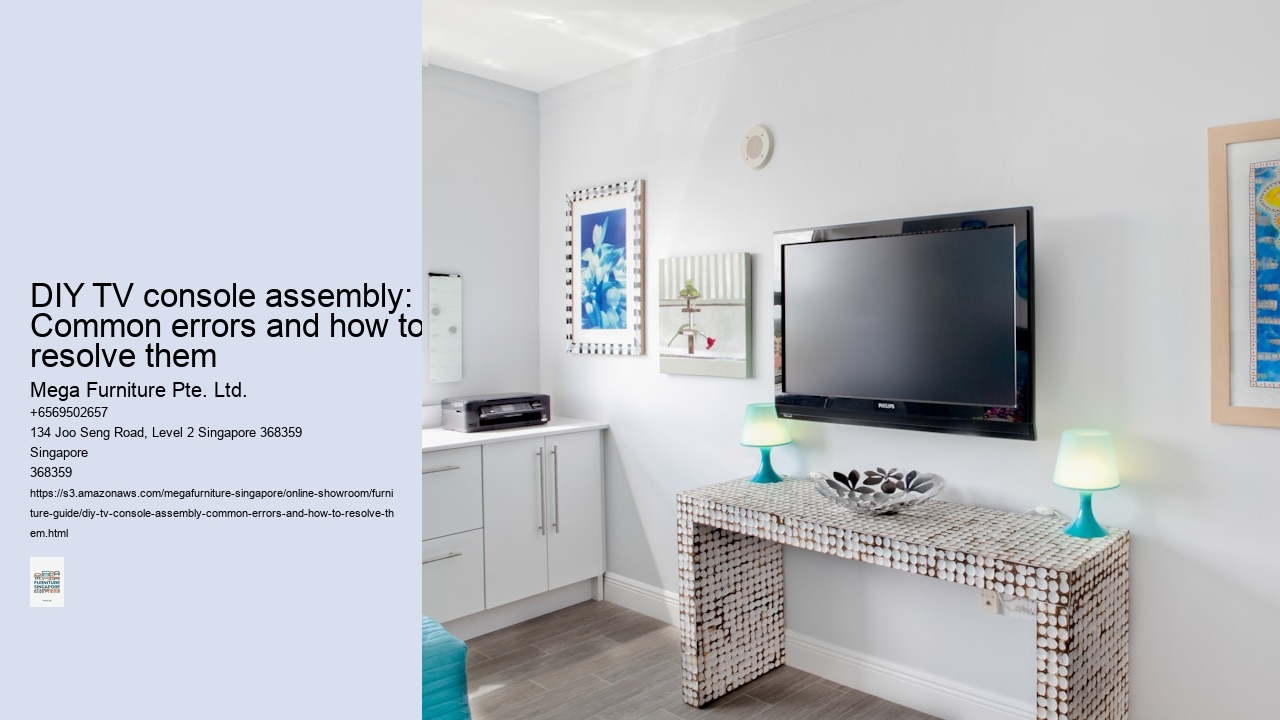
A TV console in a Tampines condo with two cats and an air-con unit that runs only at night will face two distinct, relentless enemies: ambient moisture and determined claws. The result is often a warped panel near the window or a glossy surface that looks like it's been keyed after a few months. You're not just choosing a piece of furniture; you're selecting a material that needs to survive the local climate and your household's daily rhythms.
Solid wood, while beautiful, is a gamble here. Even sealed teak or oak can warp in a humid 4-room BTO flat where the dehumidifier isn't running 24/7. For stability, engineered wood cores with quality melamine or laminate veneers are the pragmatic choice — they're manufactured to resist the moisture that causes solid timber to swell and twist. The key is in the sealing; check that every edge, especially the often-overlooked rear edge, is properly capped or banded to prevent moisture ingress that leads to that telltale bubbling at the corners.
Finishes matter just as much as the core material. A high-gloss white finish might look sleek in the showroom, but it’ll show every single scratch from a cat jumping up or a child’s toy car. Textured melamine surfaces or matte laminates are far more forgiving, hiding minor scuffs and maintaining their appearance with just a wipe-down. It’s a functional choice that preserves the console’s look as a feature piece for your living room wall, rather than letting it become a canvas for wear and tear.
Consider the entire assembly, not just the flat surfaces. Drawer runners and metal feet should have some form of corrosion resistance — a console with rusty glides after a couple of years is a common, frustrating error. For families, a textured, darker-toned laminate around $1,200 to $2,400 for a 180cm unit strikes a balance between style and practicality; it won’t highlight dust or water rings from condensation, and it can handle the occasional impact from a stray basketball.
Ultimately, the goal is a console that you don't have to fret over. You can browse options designed for these local conditions, focusing on those with robust, sealed construction and finishes that age gracefully rather than deteriorate.
Singapore’s HDB and condo floors aren’t perfectly flat—that slight slope in a 4-room BTO living room means a TV console will wobble if you just bolt the legs straight down. You’ll notice it when a glass of water placed on the unit slowly slides toward one end, or when doors don’t align properly after assembly. The fix is simple: use plastic or wooden shims under the relevant legs before final tightening, checking with a spirit level across the full 180cm length. Ignoring this step leads to uneven weight distribution, stressing joints over time, and that annoying rocking sensation every time you adjust your media player. It’s a five-minute task that prevents years of irritation.
Cam locks and dowel connectors in particleboard consoles are unforgiving; an eager DIYer with a cordless drill can strip the soft internal threads in seconds, rendering a whole panel useless. The telltale sign is a screw that spins freely without ever tightening, leaving a drawer front permanently loose or a shelf bracket insecure. You should turn the key or Allen wrench only until you feel definite resistance, then stop—that’s sufficient for the engineered plastic to hold. Applying more torque, especially on budget-friendly MDF-based units, often creates a repair problem that requires filler, new hardware, or even a replacement panel. Hand-tightening is usually safer than power tools for these final adjustments.
Tall, floor-standing consoles, particularly those over 60cm high and loaded with a 55-inch TV, become top-heavy and dangerous if not secured. In a household with young children or even just frequent bumping, an unanchored unit can tilt forward with catastrophic results. The process involves fitting the provided anti-tip brackets to the console’s back frame and screwing them securely into a solid wall, avoiding hollow areas where possible. Many buyers skip this step because the instructions bury it at the end, or they assume the unit’s weight alone guarantees stability. That’s a critical safety oversight—anchoring is non-optional for any freestanding media cabinet in a family home.
Assembly manuals prescribe a specific order—attach sides to base before adding back panels, install drawers before fixing the top—and deviating from it creates impossible situations. A common bloke in a Tampines flat might fix the decorative front apron first, only to find he can’t now slide the internal shelving frame into its slot. These errors force partial disassembly, which often damages cam locks or finish coatings when parts are pried apart. Following the sequence isn’t about pedantry; it’s about physical access and clearance, ensuring each component can be manoeuvred into place without obstruction. Rushing ahead to the “visible” parts usually backfires, adding an hour of frustrating rework.
Using the wrong tool, like a standard Phillips head for a Pozidriv screw or a coarse wood bit for pre-drilled particleboard, damages components quietly. You might not notice the stripped screw head until later when you can’t disassemble for a move, or see the enlarged, ragged hole that no longer holds a dowel snug. The kit usually includes the correct key or bit, but it’s small and easily overlooked in the packaging foam. Investing in a basic multi-driver set with various heads, or at least carefully matching the tool to the screw type shown in the diagram, preserves the hardware for future adjustments. It’s a minor pre-assembly check that saves major hassle down the line.
The most expensive TV console in a showroom can’t hide a rat’s nest of cables spilling out the back — it’s the single detail that ruins a sleek media wall. In a typical 4-room BTO living room, you’ll likely have a power strip, a console, a soundbar, and a media player, each with its own transformer and cord. Route them all through dedicated rear grommets, those neat circular cut-outs, which are now a standard feature in better-designed units; this single act keeps all wiring confined to the cabinet’s interior and completely out of sight from the seating area.
Once inside, don’t just shove the cables into a corner. Use adhesive-backed cable clips or velcro straps along the cabinet’s inner walls to bundle wires by device or function. This isn’t just about tidiness — it prevents tangling, makes swapping out an HDMI cable a thirty-second job instead of a frantic dig, and crucially, allows for proper airflow around your equipment. A tightly wound, organised bundle generates less heat than a chaotic mass, which matters in our perennial humidity.
For the power strip itself, secure it with heavy-duty hook-and-loop tape to the cabinet’s back panel or floor, keeping it elevated off the surface in case of any accidental spills. Run the strip’s single, thick power cord out through its own grommet directly to the wall socket. This setup means you only ever see one clean cord — that main power lead — discreetly trailing down to the skirting board, where a simple cord cover can paint over it to match your feature wall.
The goal is a view from your sofa that shows only the TV and the console’s clean lines, not a single wire. It’s a practical discipline that pays off every day, maintaining that curated look you spent months planning. For consoles built with this kind of cable management in mind, from floating designs to solid wood statement pieces, it’s worth browsing the options to see how integrated solutions can simplify your setup.
The showroom floor is where a 240-centimetre console stops being a product shot and starts being a piece of furniture that has to fit your wall. You’ll see the grain of the laminate up close, feel the drawer’s glide, and gauge whether the advertised cable management is a tidy system or an afterthought. For something that holds several thousand dollars’ worth of electronics, that tactile check is non-negotiable. This is why a trip to a Megafurniture showroom, whether at Joo Seng or Tampines, makes sense before committing. Their range spans the common 120cm to 240cm lengths, which directly correspond to TV sizes from 40 to 75 inches seen in many BTO living rooms. The variation isn’t just about scale; it’s about proportion. A 180cm floating unit can visually anchor a media wall in a 4-room flat without overwhelming the space, while a full 240cm floor-standing design might be the only thing that balances a 75-inch screen in a larger condo layout. Assess the construction where it matters. Press down on the centre of a long span to check for flex—cheaper particle board will often betray itself here. Open every door and drawer; listen for silence, not a scrape. The integrated cable management they tout is a key feature, but its execution varies. Some consoles offer simple rear cut-outs, while others have dedicated channels and access panels that genuinely keep a tangle of HDMI and power cords from becoming an eyesore. That’s a detail you only verify in person. Finish quality is another visual and tactile decision. A high-gloss white laminate might look pristine under showroom lights but could show every fingerprint in a sun-drenched living room in Tampines. A woodgrain finish needs to be inspected for colour consistency across panels, especially on a longer unit where mismatched shades become obvious. It’s these practicalities, not just the style, that determine if a console will look good in your home for years. You can
browse their console collection onlineto shortlist, but the final choice should happen with your hand on the surface and your tape measure out. Consider, too, how you’ll actually use it. A family with gaming consoles and set-top boxes needs that cable management to be truly accessible, not just a marketing bullet point. The difference between a console that contains the chaos and one that merely hides it becomes apparent within a week of moving in.
The delivery truck can’t get to your void deck if it can’t get under the block. It’s a mundane reality, but one that trips up many BTO flat buyers who forget to confirm the lift-landing dimensions before ordering a 240cm console; a piece that long often arrives flat-packed in a box that’s simply too tall for the service lift’s 2.1-metre opening. Measure the route from the lorry bay to your front door, then share those figures with the retailer — it saves the awkward, costly rescheduling that happens when a delivery crew has to turn back at the lift lobby. Professional assembly is frequently the smarter investment for wall-mounted or floating units, especially in newer condos with feature walls of brittle sintered stone or marble-look laminates. A DIY attempt here risks more than a wobbly shelf; one mis-drilled anchor can spiderweb an expensive wall panel, turning a simple furniture install into a major repair job. The cost for a two-person assembly team, typically around $80 to $150, buys you confidence that the console is securely fixed to the right studs and that all cables are neatly routed through the pre-cut management channels. That confidence should extend to the warranty, which needs to explicitly cover our local climate. Singapore’s persistent 80% humidity doesn’t just warp solid wood — it can cause laminated particle board to swell at the edges, delaminate veneers, and encourage mould in poorly ventilated media walls. A robust warranty will state coverage for material defects exacerbated by humid conditions for a minimum of 12 months, not just for mechanical failures like drawer slides. It’s a detail often buried in the fine print, but it separates furniture built for the tropics from pieces that will show distress within a single monsoon season. For standard floor-standing consoles, you might manage with a friend and an Allen key. Yet even then, the sheer length of the piece means aligning two separate cabinet bodies perfectly on an uneven HDB floor; that’s where you’ll see gaps in joinery or drawers that don’t run smooth. Checking the assembly instructions online beforehand, perhaps from
Megafurniture’s collection, gives you a sense of the task’s complexity. Ultimately, the clean, built-in look of a media wall console is its own selling point — but that seamless finish depends entirely on the logistics and support that get it there.
The questions buyers ask after they’ve clicked ‘purchase’ are the real ones — they’re about weight, humidity, and the tight corners of an HDB lift lobby. That’s where the theoretical meets the laminate.
Can a console hold a 65kg OLED TV? Most solid wood or engineered wood consoles are rated for 50–80kg on the top panel, but it’s the legs you need to check. A 65kg TV on a 180cm span typically requires a centre support leg or a reinforced metal frame; a console with only two end legs might sag over time, especially in our humidity. Look for specifications listing ‘distributed weight capacity’ — if it’s not stated, err on the side of over-engineering.
Is a 180cm console too long for a 3.2m wall? In a typical 4-room BTO living room, that leaves about 70cm on each side, which is actually the ideal proportion for a balanced media wall. Anything shorter can look stranded. The visual issue isn’t length, but depth — a console over 45cm deep can overwhelm a narrow space, making that 3.2m wall feel closer to 2.8.
How do you clean white laminate in humid weather? A dry microfibre cloth first, then a damp one with a drop of mild detergent. Never use a soaking wet cloth; the moisture seeps into the seams and edges, which is where white laminate yellows or swells in Singapore’s climate. It’s a weekly wipe-down, not a monthly deep-clean, that keeps it looking fresh.
What if the delivered item gets scratched during HDB lift transit? This is where buying from a retailer with their own delivery fleet pays off. They’ll typically wrap the piece in moving blankets and use a trolley, but scratches on corners from lift door frames are a known hazard. Your recourse is immediate: photograph the damage before the delivery team leaves and refuse acceptance, which triggers the retailer’s inspection and replacement process. Don’t sign the delivery note until you’ve checked every visible surface.
The most common mistake in console assembly isn’t the build itself—it’s realising your 180cm unit won’t fit past the front door. You’ll see it in HDB corridors across Ang Mo Kio or Bedok: a flat-pack box wedged diagonally, blocking the neighbour’s shoe rack while the buyer recalibrates. That final moment of measurement is about more than wall space; it’s a logistical map of your home’s specific bottlenecks.
Start with the corridor and doorway. A typical HDB main door swings inward to about a 90-degree angle, which can steal precious centimetres from your clearance path. Measure the narrowest point the box must traverse—often the corridor width minus the door’s swing radius. For a common 120cm-wide corridor, a door swinging open can reduce functional clearance to under 100cm. Then, check the console’s packaged dimensions, not just its assembled length; that sleek 200cm oak console might ship in a box that’s 210cm long and 50cm deep.
Inside the living room, the tape measure becomes your design tool. Mark your desired TV’s width on the wall with painter’s tape, then measure for a console that extends at least 10-15cm beyond the screen on each side for visual balance. Depth is critical, too. Account for your deepest existing equipment, like an AV receiver or game console, which might need 40cm plus breathing room for cables. Don’t forget to verify the power point’s location; if it’s set low behind where the console back panel will sit, you might need to cut an access port or choose a design with an open back.
These steps feel tedious, but they prevent the true headache: a finished console that forces your door to stay ajar or hides the only power outlet. It’s the unglamorous work that separates a seamless media wall from a costly compromise.
The living room wall in a typical 3-room BTO flat measures around 3.2 metres from doorframe to window - that's your absolute boundary, and your console's length should respect it. Squeezing a 240cm unit into that space leaves mere slivers at each end; the whole wall feels choked. Conversely, a 120cm console beneath a 75-inch TV looks absurdly small, like a tiny raft under a massive ship. The visual rule is simple: the console's length should roughly match the TV's width, with some breathing room on either side.
For the increasingly common 75-inch screen, you're looking at a TV width of around 167cm. A TV console anchors the wall opposite the sofa in the same way a tall bookshelf anchors a corner — long horizontal piece, mix of open and closed storage, defines the visual weight of one whole side of the room. Megafurniture's TV Console range covers floating wall-mounted designs, low-profile freestanding consoles, and modular feature-wall configurations. Most pieces sit at 40-50cm height, sized for screens up to 75 inches.. A console under 200cm will start to feel visually disproportionate, leaving the television seeming to float precariously overhead. Aim for a 200cm to 220cm unit; it grounds the setup and provides the substantial surface area needed for soundbars, media boxes, and the odd decorative object. That length also maximises your concealed storage - a critical consideration when every square metre in a 4-room resale flat is accounted for.
Floating consoles, mounted securely to the wall studs, are a clever hack for compact condos where floor area is precious. They create a clean, uninterrupted line that makes the room feel larger, and they eliminate the visual bulk of legs or a full cabinet base. The space beneath becomes a useful zone for a robotic vacuum or a low basket for remotes, while the illusion of more floor is maintained. Just ensure your wall can bear the load, especially if you're planning to store heavy AV equipment inside.
Material choice interacts directly with scale. A 220cm console in solid rubberwood is a serious, weighty piece of furniture; the same size in a laminate finish with a light oak veneer feels far less imposing. In many HDB layouts, a long, low-slung console in a light finish can almost mimic a built-in platform, anchoring the entertainment zone without dominating it. The goal is a balanced composition where the console doesn't shrink from the TV but doesn't overwhelm the room either - it's the supporting plinth, not the main event.
You'll find a range of suitable lengths and styles, from wall-mounted to floor-standing, that can address this proportional challenge.
The living room wall in a typical 3-room BTO flat measures around 3.2 metres from doorframe to window — that’s your absolute boundary, and your console’s length should respect it. Squeezing a 240cm unit into that space leaves mere slivers at each end; the whole wall feels choked. Conversely, a 120cm console beneath a 75-inch TV looks absurdly small, like a tiny raft under a massive ship. The visual rule is simple: the console’s length should roughly match the TV’s width, with some breathing room on either side.
For the increasingly common 75-inch screen, you’re looking at a TV width of around 167cm. A console under 200cm will start to feel visually disproportionate, leaving the television seeming to float precariously overhead. Aim for a 200cm to 220cm unit; it grounds the setup and provides the substantial surface area needed for soundbars, media boxes, and the odd decorative object. That length also maximises your concealed storage — a critical consideration when every square metre in a 4-room resale flat is accounted for.
Floating consoles, mounted securely to the wall studs, are a clever hack for compact condos where floor area is precious. They create a clean, uninterrupted line that makes the room feel larger, and they eliminate the visual bulk of legs or a full cabinet base. The space beneath becomes a useful zone for a robotic vacuum or a low basket for remotes, while the illusion of more floor is maintained. Just ensure your wall can bear the load, especially if you’re planning to store heavy AV equipment inside.
Material choice interacts directly with scale. A 220cm console in solid rubberwood is a serious, weighty piece of furniture; the same size in a laminate finish with a light oak veneer feels far less imposing. In many HDB layouts, a long, low-slung console in a light finish can almost mimic a built-in platform, anchoring the entertainment zone without dominating it. The goal is a balanced composition where the console doesn’t shrink from the TV but doesn’t overwhelm the room either — it’s the supporting plinth, not the main event.
You’ll find a range of suitable lengths and styles, from wall-mounted to floor-standing, that can address this proportional challenge.